
Releasing the GDPx3 Cell Painting Dataset
Ginkgo Datapoints has unveiled GDPx3, the third installment in its functional genomics dataset series
GDPx3 dataset is now accessible via the Ginkgo Datapoints portal.
Dataset Overview
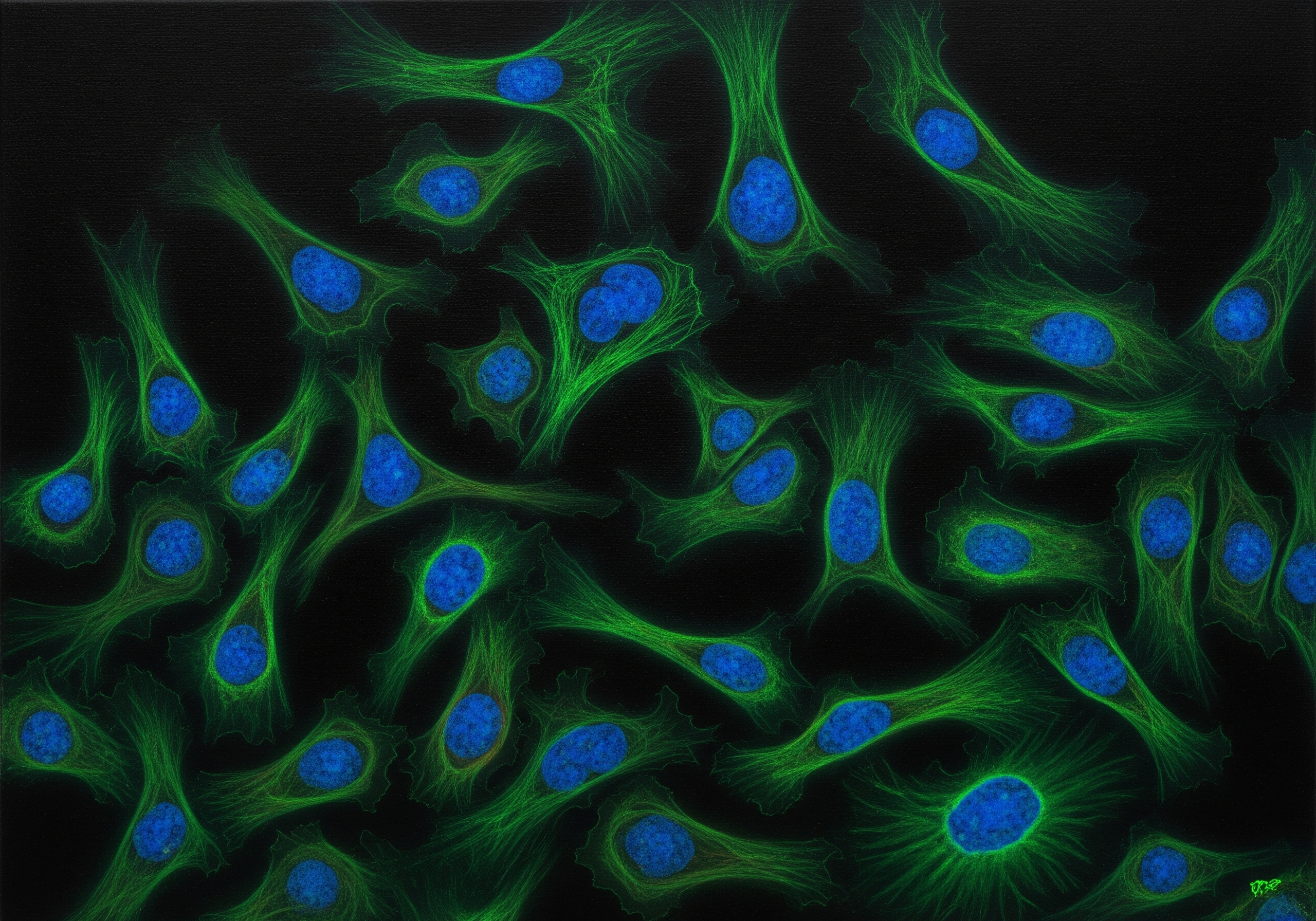
GDPx3 comprises high-resolution images of human cells stained with fluorescent dyes to highlight key cellular structures such as the nucleus, mitochondria, and cytoskeleton.
The dataset includes the following cell types:
- Aortic endothelial cells
- Aortic smooth muscle cells (VSMCs)
- Dermal fibroblasts
- A549 human lung adenocarcinoma cell line
Cells were treated with 13 pharmacologically active compounds from the LOPAC 1280 library across multiple concentrations and two time points, with technical replicates to ensure data robustness.
Phenotypic profiles of pharmacologically active compounds
Example images from the GDPx3 dataset illustrating the range of phenotypes captured by cell painting.
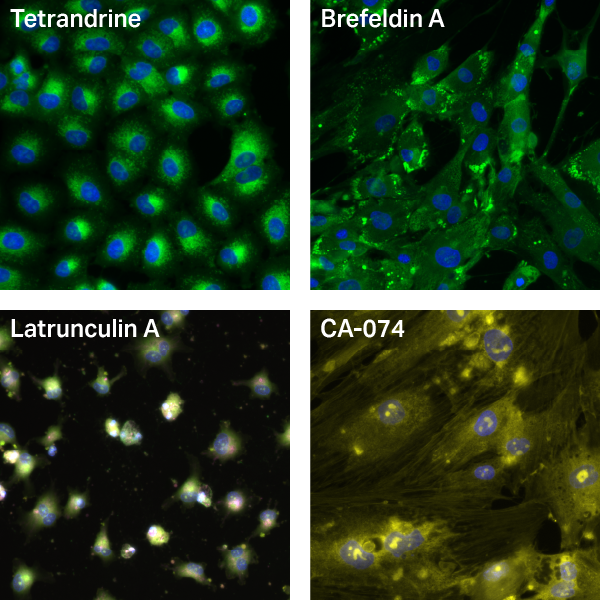
- Tetrandrine is a calcium channel blocker.
- Brefeldin A is an ER-Golgi trafficking inhibitor.
- Latrunculin Breaks in the actin cytoskeleton and causes cell death.
- CA-074-ME is an anti-inflammatory known to cause abundant Golgi staining.
The full dataset encompasses approximately 220 GB of imaging data representing 13 pharmacologically active compounds, multiple concentrations, multiple technical replicates, and 2 timepoints.
Applications of GDPx3
The GDPx3 dataset is designed to support a range of research and development applications, including:
- Mechanism of Action (MoA) prediction by comparing morphological profiles
- Phenotypic screening to identify compounds inducing specific cellular changes
- Toxicity prediction through early detection of cytotoxic effects
- Drug repurposing by matching morphological profiles across different indications
- Machine learning applications for compound classification and phenotype clustering
- Target deconvolution by correlating morphological profiles with gene perturbations
- Pathway analysis and biomarker discovery
Accessing the Dataset
Researchers and developers can download the dataset directly from the Ginkgo Datapoints portal.
For those requiring larger or customized datasets, Ginkgo offers licensing options and encourages direct contact to discuss specific project needs.
By releasing GDPx3, Ginkgo aims to contribute to the growing ecosystem of AI-driven biological research, facilitating advancements in drug discovery and functional genomics.