DRUG-seq
How does the transcriptome respond?
HT-transcriptomics
10,000+ genes per well across 384-well plates, from cell culture to AI/ML-ready counts.

The world leader in DRUG-seq. See how cells respond to every perturbation.
Transcriptomics, morphology, and custom assays. Library scale. Data built for machine learning.
How does the transcriptome respond?
10,000+ genes per well across 384-well plates, from cell culture to AI/ML-ready counts.

How does the cell change shape?
Multiplexed morphological profiling with hundreds of features per cell.
What happens without this gene?
Arrayed whole-genome knockouts with weekly data delivery.
What does this molecule do?
Full library screens, dose-response, MoA deconvolution, and on/off-target oligo screening.
Does it work in relevant biology?
iPSC neurons, primary immune cells, organoids, hepatocyte toxicity, and custom assays.
[ Offerings ]
Profile broadly with standardized readouts, or build an assay around your biology.
Industrialized DRUG-seq and Cell Painting at library scale across primary human cell types.
You receive
Transcriptomic + morphological profiles
Custom phenotypic, target-engagement, and reporter assays built around your target and biology.
You receive
Validated hits, leads, and targets
[ AI/ML ]
A multilayer perceptron mechanism-of-action classifier trained on the ReFrame library (colored) predicts mechanisms for unannotated compounds from previous VCPI releases (grey).
ReFrame: 13,000 curated, clinically relevant compounds. Thanks to our collaborators at the Calibr-Skaggs Institute for Innovative Medicines at Scripps Research for providing the library.
Explore VCPI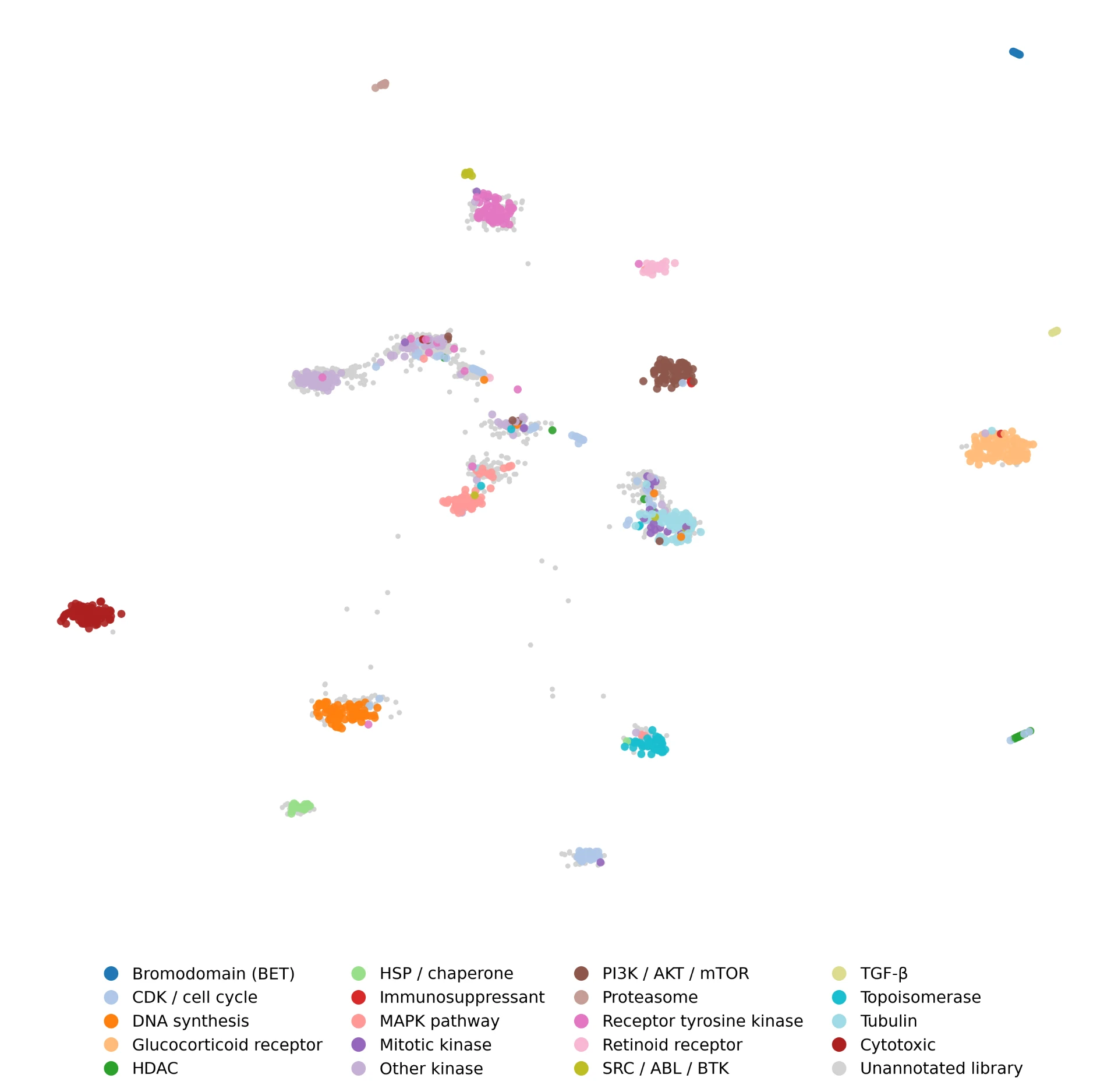
Perturbation Response Profiling and Specialized HTS in one deck